
Master: X-ray Techniques for Materials Characterization
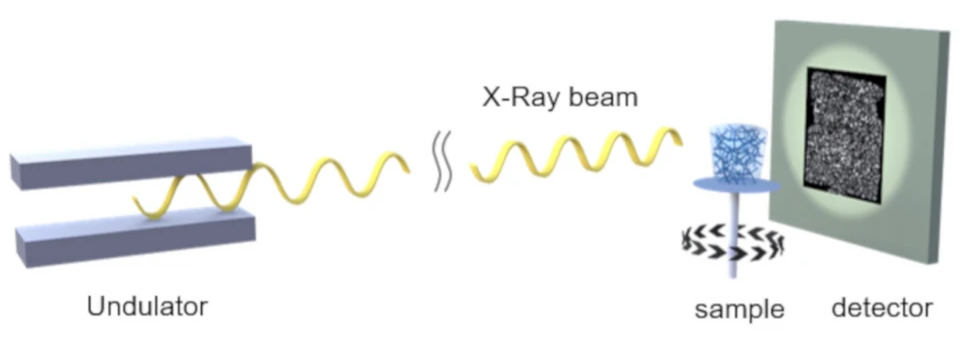
Discover the key technologies that make it possible to visualize the inner structure of materials! This lecture introduces you to the physical principles of X-ray generation and interaction with matter and guides you through modern experimental methods such as absorption- and phase-contrast CT, X-ray microscopy, X-ray diffraction, as well as absorption and fluorescence spectroscopy. In addition, you will learn essential concepts of image processing, including filtering, segmentation algorithms, and morphological operations.
After completing this course, you will
✨ understand which factors must be considered when planning and conducting synchrotron experiments depending on the material,
✨ be able to analyze the data collected in such experiments and reliably assess common image artifacts,
✨ be capable of implementing basic image processing algorithms in Python,
✨ compare synchrotron and laboratory-based methods and explain their physical foundations.
Learn how advanced X-ray techniques are driving materials research forward – and develop the skills to apply these methods effectively!
Learning goals
- The students are able to plan the essential requirements for synchrotron experiments (absorption and phase-contrast tomography, diffraction, fluorescence) for materials characterization depending on the material and explain their approach.
- They are also capable of analyzing the data collected in such experiments and assessing any image artifacts that occur.
- For data analysis, the students are able to implement simple image processing algorithms in Python.
- Furthermore, the students can compare synchrotron and laboratory methods and are familiar with the corresponding physical principles.
Lecture content
- Generation of X-rays and their interaction with matter
- Absorption- and phase-contrast–based computed tomography
- X-ray microscopy
- X-ray diffraction
- Absorption and fluorescence spectroscopy
- Image processing (filters, segmentation algorithms, morphological operators)
Comments
- The exam is either a written or an oral exam
- The lecture is given in English
- Recommended prior knowledge is „Mathematik für Ingenieure 1-3“ and „Einführung in die Programmierung“